DesignScout runs a headless browser, captures how live websites look and are built, and stores the patterns locally. Claude Code reads them, generates tokens and components, and audits the result so nothing ships looking machine made.
Every step runs locally against a SQLite database in ~/.designscout. No images leave your machine.
Full-page screenshots at any viewport, or mobile, tablet, and desktop in one call. Scrolls to trigger lazy content, dismisses cookie banners, flags responsive breakage.
Colours, type scale, fonts, icon sets, animation libraries, CSS variables, and breakpoints, pulled from the live DOM rather than guessed from a screenshot.
About 27 deterministic rules catch AI design tells and copy tells: overused fonts, cream palettes, gradient text, glassmorphism, em-dash density, filler phrases. No LLM in the loop.
Design tokens in six formats, three distinct style directions, and audit-clean React or HTML components. Greys auto-tint toward the brand hue; font stacks skip the monoculture.
Walk a whole site, dedupe near-identical pages by structural fingerprint, and score cross-page consistency: font drift, palette spread, unstable nav and footer.
Component inventory straight from the DOM: buttons, inputs, cards, and badges grouped by variant, with computed styles and usage counts for each.
Render the code you just generated at mobile, tablet, and desktop. Reports horizontal overflow with the offending elements, sub-44px tap targets, missing viewport meta, broken images, console errors, and inline-script syntax.
Check WCAG contrast in light and dark, emit a guarded scroll-animation layer, resolve exact CDN versions, then inline every asset into one self-contained file that opens with no network.
The server writes screenshots to disk and returns their paths. Claude Code opens the PNGs with its own vision. Token generation and auditing are plain code.
Playwright Chromium visits the site, scrolls it, and records every section plus the raw HTML.
Claude reads the frames, fills the analysis schema, and stores structured patterns in SQLite.
Tokens, style directions, a DESIGN.md, components, or a motion layer come out of the stored patterns.
The detector checks the output for AI tells. Clean moves on; tells found means regenerate.
Render it at every width, check contrast in both themes, then inline every asset into one portable file.
Real front ends, generated from captured design systems instead of a model's defaults. The three below are one design study — five reference sites captured and distilled — run through three separate direction passes, the same shape as scout_styles's Refined, Bold, and Expressive output.
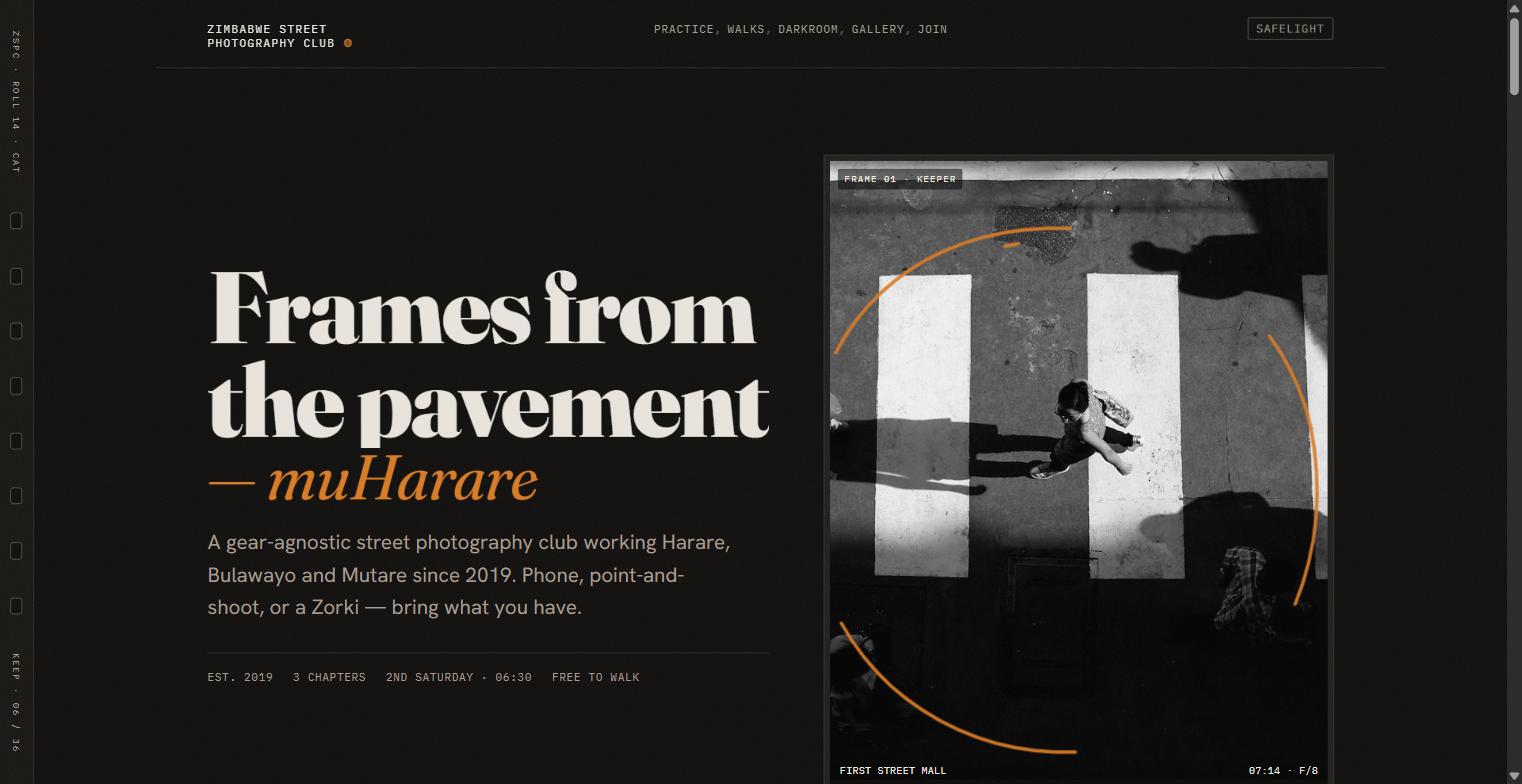
Frame numbers down a sprocket rail, grease-pencil keeper marks, a hero photo that "develops" from blurred sepia to sharp on scroll.
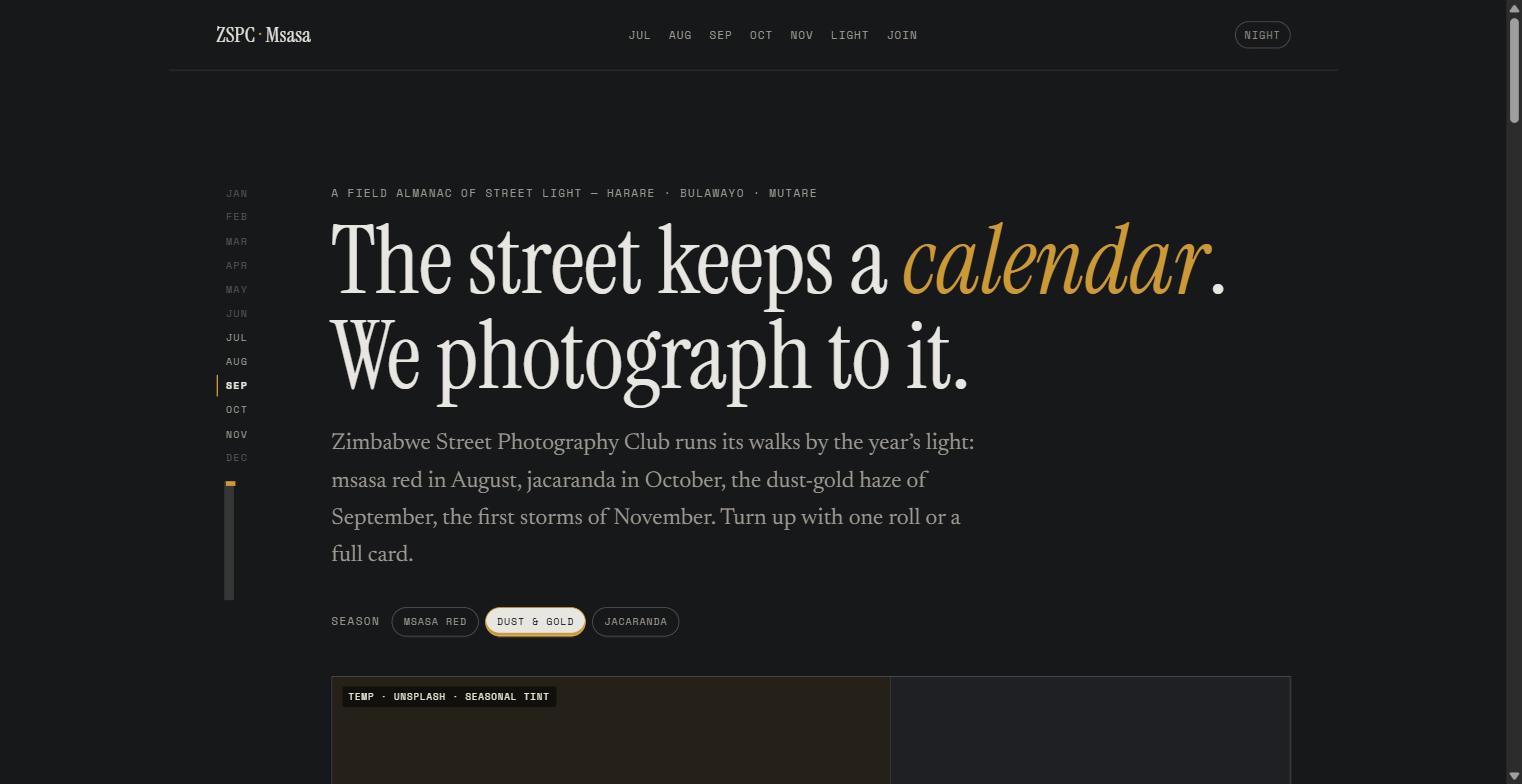
Same brief, same tokens pool, an entirely different read: a twelve-month spine where the whole page re-tints — wine, gold, jacaranda — as the year turns.
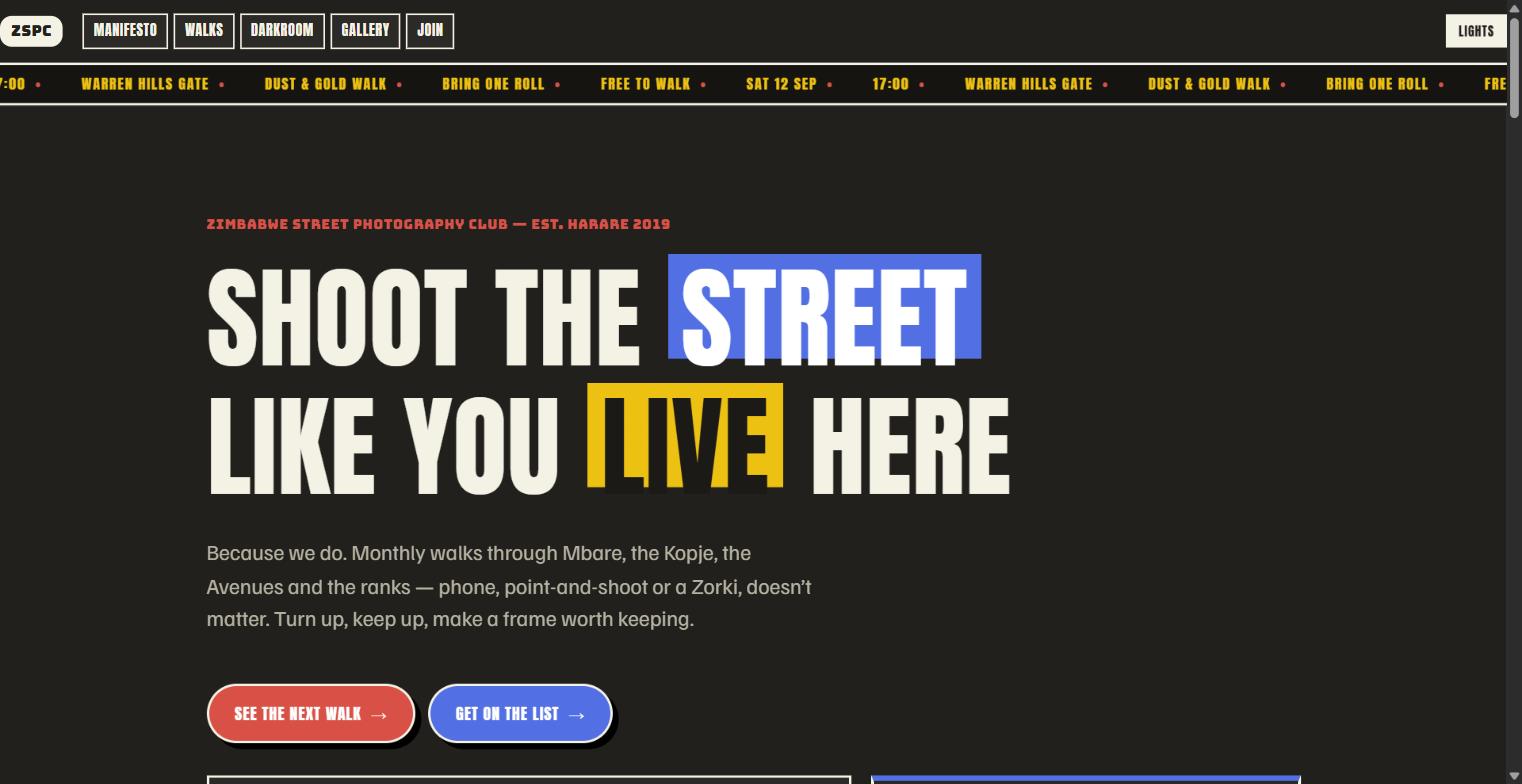
Same brief again: the nav is a route board, and a scroll-velocity-reactive marquee runs today's walk like a kombi destination sign.
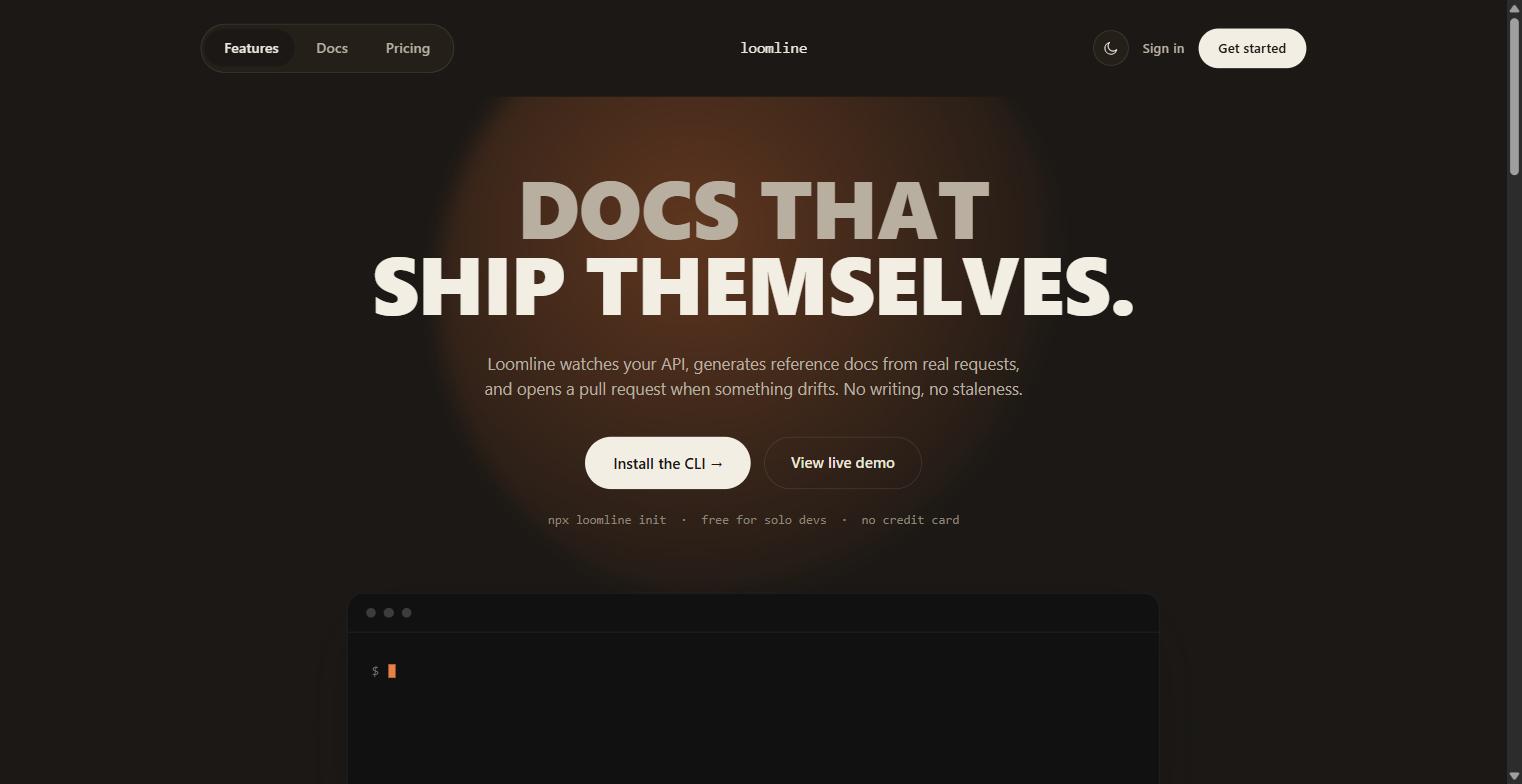
Tokens extracted from a captured reference, a DESIGN.md generated straight from the pattern set, then a full dark/light landing page built off it.
Each one also has a matching CLI subcommand for scripting or piping context.
Visit a URL, scroll the full page, capture viewport frames. Responsive mode, selector-scoped capture, layout-breakage detection, cookie-banner dismissal. Persists the raw HTML.
Breadth-first crawl of a site's internal pages. Screenshot and design signals per page, near-duplicate pages deduped by structural fingerprint.
Return screenshot paths plus the analysis schema for Claude Code to fill in visually.
Save Claude Code's structured analysis (colour, type, layout, component, mood) to the local database.
Query the pattern database by keyword and category. Every capture adds to the library.
Screenshot paths and patterns for two or more captured sites, side by side.
Component inventory from the live DOM: buttons, inputs, cards, badges grouped by variant with computed styles and counts.
Pre-generation checklist for a captured site: imagery, motion, forms, theming, responsive coverage, fonts, and bundling turned into explicit choices, each seeded from what the reference does.
Generate tokens as json, css, tailwind, style-dictionary, w3c (DTCG), or figma (Tokens Studio).
Three design directions, Refined, Bold, and Expressive, each with its own complete token set.
Scaffold hero, navbar, card, footer, features, testimonials, cta, or pricing as React or HTML from a token set. Runs the audit rules on its own output.
Guarded scroll-animation layer as CSS + JS: reveal, parallax, line-mask, count-up, marquee, magnetic, blur-in, optional theme transition. Vanilla or GSAP. Bails under prefers-reduced-motion.
Build an HTML mood board from captured sites: screenshots, palettes, type analysis, mood tags.
Generate an impeccable-compatible DESIGN.md that any AI coding tool can read and enforce.
Anti-pattern detection on a file, raw text, or a captured site (real HTML plus extracted styles and tokens).
Deterministic accessibility scan: alt text, control names, labels, heading order, landmarks, focus rings, with a 0 to 100 score.
Cross-page consistency report from a crawl: font drift, palette spread, unstable nav and footer, with a score and an HTML report.
Render generated HTML — a file, a string, or a URL — at mobile/tablet/desktop and report horizontal overflow with the offending elements, tap-target size, missing meta, broken images, console errors, script syntax, and AI-tell lint.
WCAG 2.1 contrast for a single pair, a CSS file, or a whole token set — token mode checks light and dark together so a combo that passes one theme but fails the other is caught. Returns a fix per failure.
Inline remote images as data: URIs and allowlisted CDN script/style into one self-contained file that opens with no network. Adds missing charset and viewport meta.
Resolve exact pinned versions and ready-to-paste script URLs for CDN libraries — cdnjs, then jsDelivr. Handles the awkward ones (gsap, ScrollTrigger, lenis).
List captured sites and crawls held in the local database.
Remove a captured site or crawl, along with its screenshots and outputs.
Point scout_audit at a file, raw text, or a captured site. Every rule is a deterministic check against real markup and computed styles, not a vibe check from a model — same input, same finding, every time.
Illustrative run against a generic AI-styled hero, regenerated from a captured token set. Same shape of output scout_audit returns on a real file — see it applied to the prototypes above.
DesignScout uses impeccable for design-quality enforcement. Its own generated components and default token set pass the same audit.
| Format | Output |
|---|---|
| json | The raw DesignTokenSet |
| css | :root custom properties for colour, font, space, radius, and shadow |
| tailwind | A tailwind.config theme.extend object |
| style-dictionary | Style Dictionary v3 source with value leaves |
| w3c | W3C Design Tokens Community Group format ($type and $value) |
| figma | Tokens Studio for Figma, single global set |
You need Node 20 or newer, Claude Code, and about 400 MB of disk for the bundled Chromium.
On Windows PowerShell, use the full path with forward slashes, for example node C:/Users/you/designscout/dist/index.js. To update later: git pull && npm install && npm run build, then reconnect from /mcp.
Open source, MIT licensed, and built to keep AI output from looking like AI output.